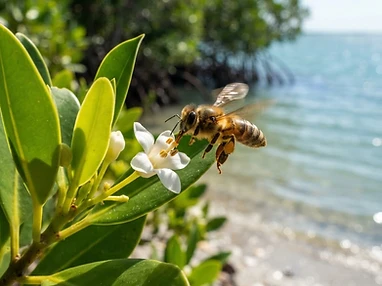
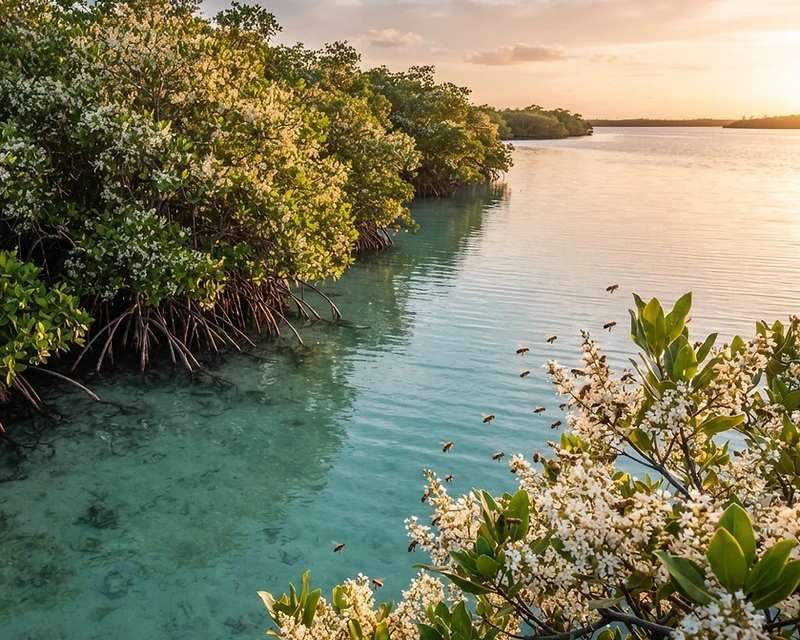
Turquoise ocean coastline with mangrove trees in bloom and honey bees pollinating the blossoms at golden hour

APOLLO BEACH · FLORIDA · GULF COAST

Honey doesn't get any more local than this!

Rare, small-batch raw honey drawn straight from our coastal apiary to your table — raw, unfiltered Black Mangrove Honey with notes of flan, caramel, vanilla & butterscotch.

Honeybees gathering on white mangrove blossoms with the Gulf of Mexico softly blurred behind them

ABOUT APOLLO BEACH HONEY · OUR STORY

Where the mangrove meets the tide.

Apollo Beach Honey is a small, family-owned coastal apiary on the southern shore of Tampa Bay, in Apollo Beach, Florida. We raise rescue bees and produce raw, unfiltered mangrove honey drawn straight from our hives to your table.

Who We Are

Our apiarist is Tom Daly and his bees are rescues from right here in the Apollo Beach area. What started as a passion for saving local swarms has grown into a small, family-owned coastal apiary dedicated to sustainable beekeeping and producing the purest honey our Florida Gulf Coast has to offer.

The Story Behind Our Honey

At the quiet edge of Apollo Beach, the black mangroves flower in the salt-thick air of midsummer. Our bees forage along this brackish shoreline, drawing nectar from blossoms no other apiary can reach — yielding a honey that tastes unmistakably of the coast. The bees forage among the Black Mangroves, wildflowers, and coastal flora that make Apollo Beach and the South Shore so unique.

What We Sell

We sell raw, unfiltered Florida Gulf Coast honey in small batches: our signature Black Mangrove honey with notes of flan, caramel, vanilla and butterscotch, everyday coastal wildflower honey, and seasonal raw honeycomb. Choose from glass cork bottles, honey bears, pint and quart Mason jars, a half-gallon Mason jar, and family-size bottles — all hand-filled from our rescued Apollo Beach colonies.

What Makes Us Different

Each frame is pulled by hand, spun cold, and bottled raw. Nothing is heated, nothing is strained away. What you taste is the place itself: floral, saline, sun-warmed, alive. Every jar represents our commitment to rescuing local bee colonies, supporting pollination in our coastal mangrove habitats, and bringing you honey that's as fresh and local as it gets.

Visit & Contact
THE COASTAL MARKET

Our Coastal Honey

Raw, unfiltered honey from rescued Apollo Beach bees. Coastal Wildflower for everyday golden sweetness, and rare Black Mangrove with notes of flan, caramel & butterscotch. Never heated or pasteurized.

Small batches sell out quickly. Reach out to reserve your jar or ask about local pickup at Apollo Beach.

Fresh Summer 2026 Harvest — Currently Available
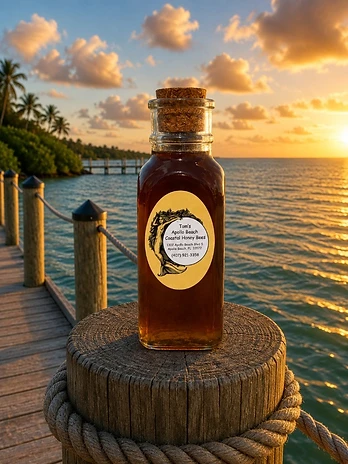
Glass cork bottle of Black Mangrove honey

Cork & Glass Bottle

$30

1 LB - MANGROVE

While Supplies Last

Our signature product. Elegant glass cork bottles of pure Mangrove Honey — the rarest honey we produce, with notes of flan, caramel, vanilla & butterscotch. Each bottle is hand-filled from our rescued Apollo Beach colonies. This year the three different mangrove plants (Black, White, and Red) were in bloom at the same time.

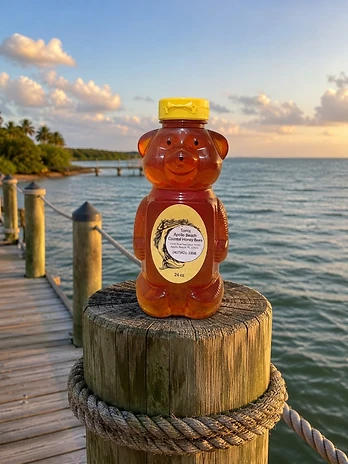
Plastic honey bear squeeze bottle

Plastic Honey Bear Bottle

$25

24 oz

Convenient squeeze bear — easy pouring for everyday use. Same pure coastal wildflower honey.

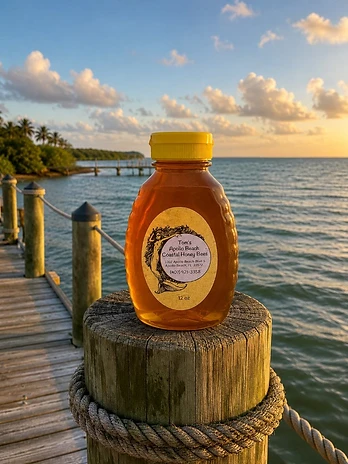
Plastic honey bottle

Plastic Honey Bottle

$15

12 OZ

Perfect for trying our honey or as a gift. Pure coastal wildflower with notes of caramel & vanilla.

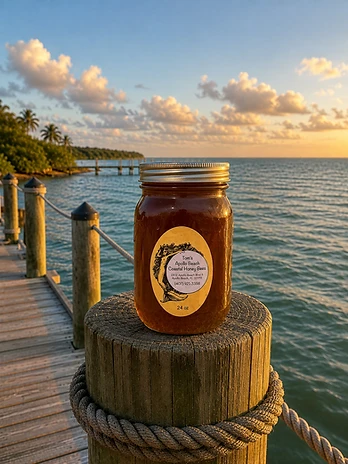
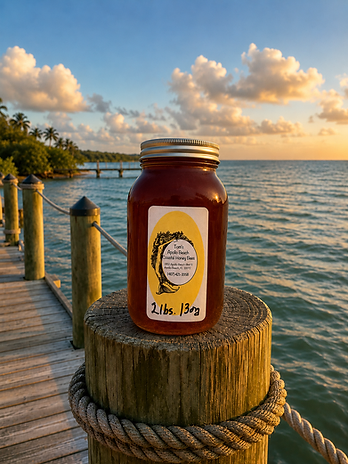
Half-gallon glass mason jar of honey

1/2 Gallon Glass Mason Jar

$100

1/2 Gallon (64 oz)

Our largest jar — for serious honey lovers and coastal kitchens. Golden, raw, and straight from the hive.

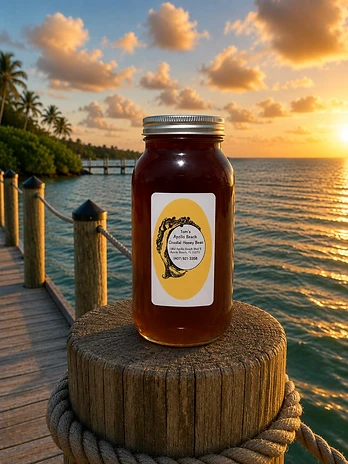
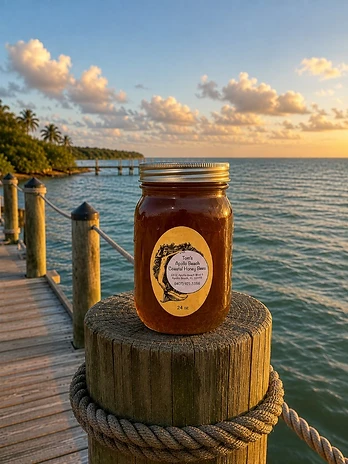
Quart glass mason jar of honey

Quart Mason Jar

$50

Quart (32 OZ)

Our easygoing everyday jar — pure coastal wildflower honey for tea, toast, and everything in between.

Pint glass mason jar of honey

Pint Glass Mason Jar

$25

24 OZ

Our easygoing everyday jar — pure coastal wildflower honey for tea, toast, and everything in between.

Seasonal Specials
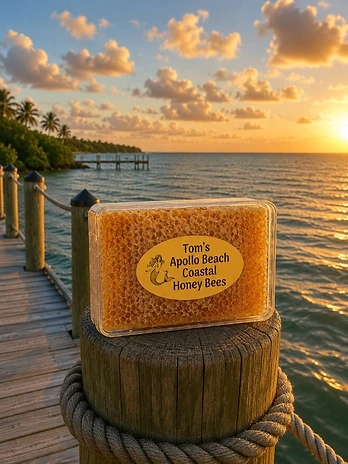
Seasonal honeycomb squares

Honeycomb Squares Seasonal - Price Varies

A cut piece of raw honeycomb, salt-kissed from the estuary air. Chew the comb like gum or let it melt straight on the tongue.

Ask About Our Availability
Seasonal honeycomb squares

Comb Honey Mason Jar Seasonal - Price Varies

A cut piece of raw honeycomb, salt-kissed from the estuary air. Chew the comb like gum or let it melt straight on the tongue.

Ask About Our Availability

Shipping & Handling

We ship via USPS Priority Mail — Tom hand-packs every order himself. Flat-rate shipping by box size:

  • 1 bottle or 1 pint jar$15
  • 2–3 bottles or 1 medium (quart) jar$25
  • 4–8 bottles or 1 large jar$35
  • Multiple glass mason jars$35

Shipped nationwide · Rate shown in cart at checkout

Local Pickup

Prefer to pick up? We're located in Apollo Beach, FL. Select Local Pickup at checkout and Tom will coordinate with you directly — no shipping charge.

1302 Apollo Beach Blvd S, Apollo Beach, FL 33572

ApolloBeachHoney@gmail.com

From Our Honey Lovers

Customer Reviews

Real feedback from folks who've tasted our raw mangrove honey. Share your own experience below — it only takes a moment.

5.0

Based on 1 review

Best honey ever!

S

My wife wanted local honey for a recipe she wanted to make. A friend told me about Tom and I stopped by. Absolutely the best honey we’ve ever had. I highly recommend him.

Stuart· Black Mangrove Honey· August 18, 2026

Share Your Experience

Your review appears instantly for other honey lovers to see.

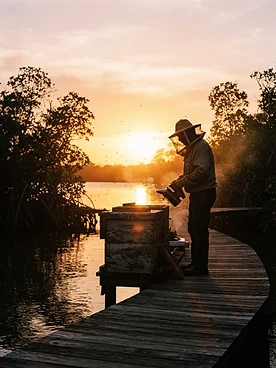
A beekeeper silhouetted against the golden sun over a mangrove estuary in Apollo Beach

NATURES MEDICINE

Health Benefits of Local Honey

🐝

Seasonal Allergy Relief

Local pollen exposure through raw honey may help your body build natural tolerance to seasonal allergens in the Apollo Beach area.

🐝

Natural Antioxidants

Rich in flavonoids and phenolic acids that fight free radicals, reduce inflammation, and support your body's natural defenses.

🐝

Soothes Sore Throats

Clinical studies show honey is more effective than many over-the-counter remedies for soothing coughs and throat irritation.

🐝

Antibacterial Properties

Raw honey contains hydrogen peroxide and other compounds that make it a powerful natural antibacterial and wound-healing agent.

🐝

Sustained Natural Energy

A blend of natural fructose and glucose provides quick-release and sustained energy — nature's perfect fuel for active lifestyles.

🐝

Pure & Unprocessed

Never heated or pasteurized — our honey retains all beneficial enzymes, pollen, vitamins, and nutrients lost in commercial processing.

These statements have not been evaluated by the FDA. Raw honey is not intended to diagnose, treat, cure, or prevent any disease. Not suitable for children under 1 year.

AMAZING BEE FACTS

12,000

Miles a single hive may fly in one season foraging the mangrove shoreline.

2M+

Flowers visited to fill just one jar of Apollo Beach mangrove honey.

100%

Of our colonies began as rescued local swarms from the Apollo Beach area.

1/12

A teaspoon of honey is roughly one bee's lifetime of work.

The small architects behind every jar.

The more you learn about honeybees, the more you'll appreciate every golden drop. Click any fact below to dive deeper with a full article.

Extreme close-up of a honeybee on a white mangrove blossom in golden light

A worker bee approaching a Black Mangrove blossom — Apollo Beach, FL

Foragers sip nectar from mangrove blossoms, store it in a special 'honey stomach,' and return to the hive where house bees evaporate the water until it thickens into honey. Pollen, by contrast, is gathered separately as a protein source for the brood.

That teaspoon represents roughly six weeks of nonstop foraging, flying, and fanning across thousands of mangrove flowers—a reminder of the extraordinary labor behind every jar.

A returning forager performs a figure-eight dance inside the hive, angling her body to tell nest mates the direction and distance of a productive nectar source relative to the sun.

Because black mangrove nectar ferments easily, beekeepers must harvest promptly and leave the honey raw—but the result is a buttery, salt-kissed flavor found nowhere else.

During peak season she outpaces her own body weight in eggs daily, and the colony's mood, population, and honey yield all depend on her health and laying rate.

In summer, workers fan their wings and spread water to cool it; in winter, they form a tight cluster and shiver their flight muscles to keep the brood warm.

Its low water content and natural acidity create an environment where microbes can't grow—sealed jars of honey have been found still edible after thousands of years in ancient tombs.

Workers do all the foraging, nursing, and guarding; drones exist only to mate with new queens; and the queen's sole job is to keep the colony growing.

From mangroves to melons, honeybees are among the most important pollinators on Earth—making every rescued colony a small win for your local food web.

Inside a single wooden box lives a superorganism whose collective decisions—where to forage, when to swarm, how to defend—emerge from thousands of tiny individual choices.

When bees swarm they're gorged on honey and remarkably calm; our rescues relocate these swarms instead of poisoning them, giving each colony a second life along the Apollo Beach shore.

The Hive Journal

Bee Knowledge Blog

Explore the fascinating world of honeybees, raw honey, and coastal ecology — from the queen's reign to the waggle dance.

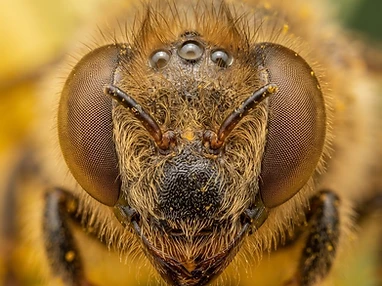
Extreme macro close-up of a honeybee's face showing large compound eyes and three ocelli

Bee Biology

Honeybee Super Senses: Five Eyes and 50x Smell

If you could see the world through a honeybee's eyes, you'd be amazed. Flowers that look plain white to humans glow with shimmering ultraviolet patterns. Scents too faint for us to detect are as clear as a flashing neon sign. And the air is full of information — magnetic fields, polarized light, electrical charges — that bees perceive as naturally as we perceive color and sound. Understanding honeybee senses reveals why these insects are such extraordinary pollinators and how they produce the raw Black Mangrove honey we harvest here in Apollo Beach.
Read Article
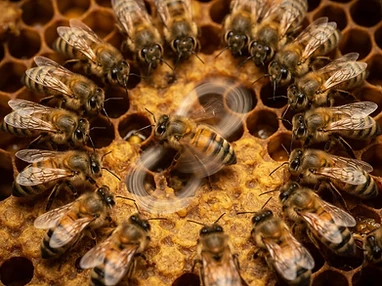
Honeybees arranged in a circle on a honeycomb around a bee performing the waggle dance

Bee Behavior

The Waggle Dance: Nature's Most Extraordinary Communication

In 1973, the Austrian ethologist Karl von Frisch won the Nobel Prize for decoding one of the most remarkable communication systems in the animal kingdom: the honeybee waggle dance. What he discovered stunned the scientific world — honeybees can communicate the exact location of food sources to their hive-mates through an elaborate, symbolic dance. At Tom's Coastal Honeybees, our bees perform this dance every day during foraging season, directing their sisters to the best Black Mangrove blooms along the Apollo Beach coast. Understanding the waggle dance reveals just how sophisticated these tiny insects truly are.

Read Article
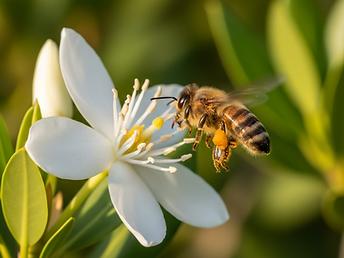
A honeybee in flight approaching a small white flower above coastal mangrove water

Pollination & Ecology

Coastal Bees and Mangroves: A Vital Partnership

Along the Gulf Coast of Florida, a remarkable partnership plays out every summer. Black Mangrove trees burst into bloom, their small white flowers offering nectar to any pollinator willing to brave the heat and humidity. And honeybees — including our rescued colonies at Tom's Coastal Honeybees — respond in force, turning that nectar into one of the rarest and most distinctive honeys in the world. This partnership between bees and mangroves isn't just about honey. It's about the health of Florida's coastal ecosystems, the protection of our shorelines, and the preservation of a fragile environment that sustains both wildlife and human communities.

Read Article
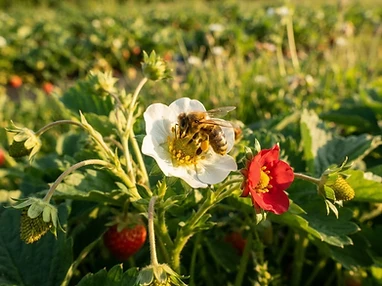
A honeybee collecting pollen from a white strawberry blossom beside a red strawberry flower

Pollination & Ecology

Why Bees Matter: One in Three Bites of Food

If honeybees disappeared tomorrow, the impact on your dinner plate would be immediate and devastating. One out of every three bites of food you eat exists because a bee pollinated the plant that produced it. From the almonds in your granola to the apples in your pie, from the coffee in your morning cup to the chocolate in your dessert — bees are the invisible workforce that feeds the world. At Tom's Coastal Honeybees, our rescued colonies do more than produce raw Black Mangrove honey. They pollinate the flowers, vegetables, and fruits of Apollo Beach and the surrounding Tampa Bay communities. Understanding the critical role bees play in our food system is the first step toward protecting them.

Read Article
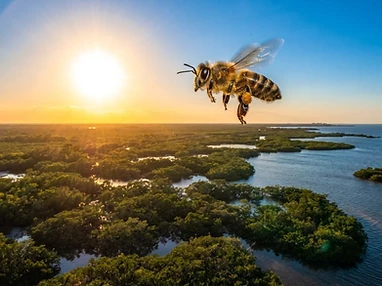
A honeybee flying over a coastal mangrove marsh at golden-hour sunset

Add a short excerpt paragraph here to introduce the article.

How Honeybees Navigate: Finding Their Way Home

Imagine flying five miles from home with no map, no GPS, no smartphone — and finding your way back unerringly. For a honeybee, this is daily life. A foraging bee may travel up to five miles from her hive in search of nectar, navigating through changing landscapes, shifting weather, and Florida's intense coastal sun. And she does it with a brain smaller than a sesame seed. At Tom's Coastal Honeybees, our bees forage among the Black Mangroves and coastal wildflowers of Apollo Beach. Understanding how they find their way to these nectar sources — and back home again — reveals one of nature's most remarkable navigation systems.

Read Article
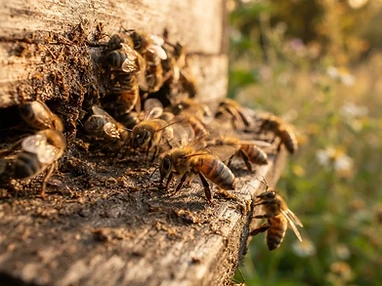
A close-up of honeybees crawling on the wooden landing board of a beehive at golden hour

Bee Behavior

Hive Temperature Control: Bees as Master Engineers

Inside a beehive, the temperature is maintained with a precision that would impress any HVAC engineer. Despite Florida's sweltering summers and occasional winter cold snaps, bees keep their hive between 93°F and 95°F year-round. They achieve this not with thermostats or fans, but with coordinated behavior involving thousands of individual bees acting as a single climate-control system. At Tom's Coastal Honeybees in Apollo Beach, understanding hive thermoregulation helps us appreciate the sophistication of our rescued colonies — and explains why our raw honey maintains its quality throughout the seasons.

Read Article
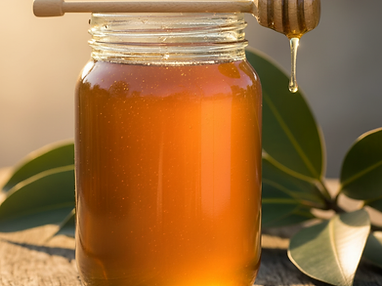
A glass jar of golden honey with a wooden dipper resting on weathered wood

Honey Production

How Bees Make Honey: 55,000 Miles per Pound

Every jar of raw Black Mangrove honey from Tom's Coastal Honeybees represents one of the most remarkable food production processes on Earth. It takes the collective effort of thousands of bees, tens of thousands of flower visits, and a complex chemical transformation to turn flower nectar into the golden honey you drizzle on your morning toast. Understanding how bees make honey deepens the appreciation for every spoonful — and explains why raw, unfiltered honey is so special.

Read Article
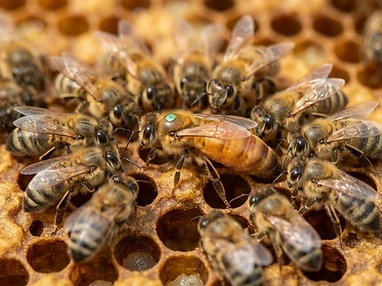
A honeybee colony on a honeycomb frame with a marked queen bee

Bee Biology

The Queen Bee: Heart and Soul of the Colony

In every honeybee hive, one bee stands above the rest — not because she gives orders, but because she gives life. The queen bee is the reproductive engine of the colony, and her presence shapes everything from the hive's mood to its honey production. Here at Tom's Coastal Honeybees in Apollo Beach, Florida, understanding the queen's role helps us appreciate the incredible journey from mangrove flower to raw honey jar.

Read Article
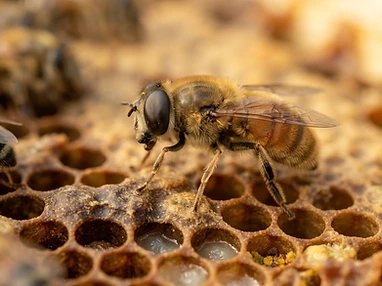
A single honeybee resting on a waxy honeycomb surface in side profile

Bee Biology

Drone Bees: The Gentlemen of the Hive

In the bustling society of a honeybee hive, most bees are frantic with activity — workers rushing in and out, the queen laying eggs, nurse bees tending larvae. But there's one group that seems to do nothing at all: the drone bees. These stout, eye-catching males have a reputation as layabouts, but their role in the colony's survival is far more important than it appears.

Read Article
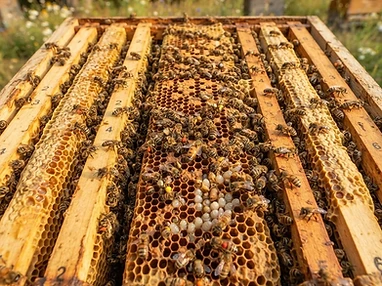
An open beehive showing wooden frames filled with bees and honeycomb and white larvae

Bee Biology

The Complete Guide to the Honeybee Hive: How 50,000 Bees Work Together as One

When you crack open a jar of raw Black Mangrove honey from Apollo Beach, you're tasting the result of one of nature's most remarkable collaborative efforts. Inside every beehive, tens of thousands of individual bees work together with such precision and coordination that the colony functions as a single living organism — what scientists call a "superorganism." In this comprehensive guide, we'll explore how a honeybee hive works, from the architecture of the comb to the division of labor that makes it all possible. Whether you're a honey enthusiast, a budding beekeeper, or simply curious about the natural world, understanding the inner workings of a beehive will give you a deeper appreciation for every golden drop.

Read Article
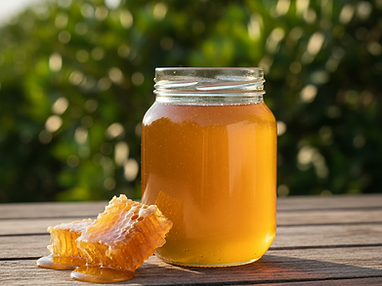
A glass jar of amber honey beside pieces of raw honeycomb on weathered wood

Bee Biology

Worker Bees: Nature's Ultimate Workaholics

Inside every beehive, an invisible workforce of thousands of female bees keeps the entire colony running. These are the worker bees — and they are, without exaggeration, the hardest-working creatures on Earth. Every jar of raw Black Mangrove honey from our Apollo Beach apiary is the product of their tireless labor.

Read Article

RECIPES

Simple ways to taste the coast.

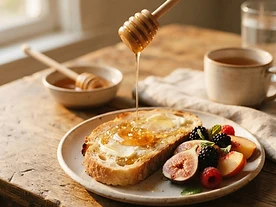
Golden Toast

Warm buttered sourdough, a drizzle of Black Mangrove Honey, and a pinch of flaky sea salt.

Honey Vinaigrette

Whisk First Light honey with olive oil, apple cider vinegar, and a squeeze of citrus.

Honey Tea

Stir a spoonful of Tide Run honey into hot chamomile tea with a slice of lemon.

Raw honey drizzled over warm buttered toast and fresh fruit
base44
Edit with Base44